
Why North Carolina?
A Story Rooted in the Cape Fear Region of North Carolina
A Migration That Transformed a Region
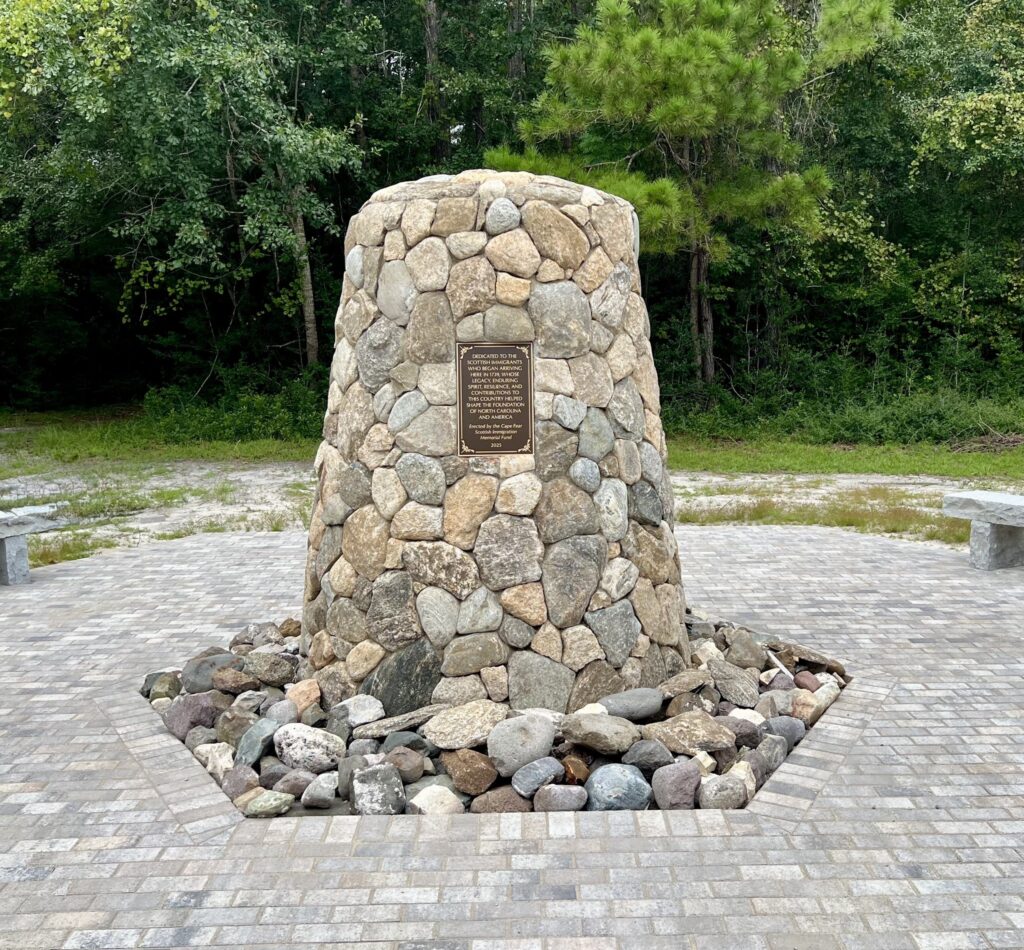
Scottish presence in the American colonies began early, but it was the eighteenth century Highland migrations that left the deepest imprint on the Cape Fear Valley. In 1739, the first large group—known as the Argyll Colony—arrived seeking opportunity and stability after decades of upheaval in Scotland. They were welcomed by Governor Gabriel Johnston, himself a Scot, who encouraged settlement along the upper Cape Fear River.
In a period of almost 100 years of emigration, thousands more Highlanders followed. By the eve of the American Revolution, eastern North Carolina had become the largest Highland Scottish settlement in North America. Families established farms, built churches, opened trading posts, and created tight knit communities that carried the rhythms of the Highlands into the Carolina landscape.
Culture That Endured Across Generations
What made the Cape Fear settlement extraordinary was not only its size, but its cultural continuity. Highland traditions remained strong well into the nineteenth century. Gaelic was spoken in parts of the region for more than a century after settlement. Presbyterian congregations became anchors of community life, emphasizing education, literacy, and moral stewardship. Music, dance, and storytelling preserved the oral traditions of the Highlands. Family networks and clan identities shaped social life and local leadership. Future visitors to the Discovery Center will encounter these traditions not as distant relics, but as living threads that connect Scotland and America across time.
A Landscape of Work, Resilience, and Adaptation
Highland settlers adapted quickly to the Carolina environment. They became central to the region’s naval stores industry, producing tar, pitch, and turpentine from the longleaf pine forests—materials essential to the maritime economy of the British Empire and later the United States.
They also developed a distinctive pattern of small scale farming, raising livestock and cultivating crops suited to the sandy soils of the Sandhills and river valleys. Their resilience and resourcefulness helped shape the economic character of early North Carolina.
Figures Who Bridged Two Worlds
The Cape Fear region attracted individuals whose stories resonate far beyond North Carolina. Among them was Flora MacDonald, celebrated in Scottish history for aiding Bonnie Prince Charlie after the Jacobite Rising of 1745. When she and her family settled near present day Fayetteville in the 1770s, she became a symbol of courage, loyalty, and the enduring ties between Scotland and the New World. Her presence in North Carolina reflects a broader truth: the region was not merely a destination for migrants, but a crossroads of global history.
A National Story with Local Roots
Scottish influence on early America extended far beyond the Cape Fear Valley. Scottish Enlightenment ideas helped shape the nation’s founding documents. Scots and Scots Irish settlers played major roles in the American Revolution, frontier expansion, and the development of American education and governance. Yet eastern North Carolina offers something unique: a place where the Scottish story can be experienced in its fullest, most concentrated form.
The Discovery Center brings this story to life through immersive exhibits, historic interpretation, and programs that celebrate the shared heritage of Scotland and America. It will stand as a testament to the people who crossed an ocean, carried their culture with them, and helped shape a new nation.
A Living Legacy
Today, the surnames, churches, landscapes, and traditions of the Cape Fear region continue to reflect the imprint of its Scottish settlers. Their legacy endures in community festivals, genealogical connections, and the pride of descendants who still call this region home.
The Scottish Heritage Discovery Center will invite visitors to explore this remarkable heritage—one that belongs not only to North Carolina, but to the story of America itself.